ADOPTED METHODOLOGY / VERSION 2.0
Carbon Forestry Methodology
Improved Forest Management – Sweden
The adopted methodology for certifying additional carbon removals through Improved Forest Management under the Carbon Forestry Standard.
Version 2.0 – Adopted August 2026 – Original text in English
About this document
Carbon Capture Company AB (CCC) applies this document as the adopted methodology for Improved Forest Management (IFM) activities under the Carbon Forestry Standard. It sets out, at the level of principle, the requirements activities must meet to be certified.
This document has a short version history: Version 1.0 was published for public consultation between 22 June and 13 July 2026 and adopted in August 2026, without substantive amendment, following supportive feedback on the methodology’s structure, logic and overall design from forest owners, scientific experts and other stakeholders that did not surface substantive proposed changes to its principles or to the numerical parameters set out in the supporting Guidance Documents. Version 2.0, also adopted in August 2026, introduces the defined term Annual Quantification Period to remove an internal terminology inconsistency identified after adoption — the Activity Period (of default length ten years, Section 6.10 and Baseline Guidance Document Section 8.1) had in places been conflated with the one-year cycle over which removals are quantified and credits issued — adds the forty-nine-year statutory maximum applicable to the Commitment Period for Swedish activities (Section 9.3), and clarifies that an activity may be extended through successive Activity Periods. These are clarifications of existing principles, not changes of substance, and do not affect carbon removals certified under Version 1.0.
This methodology has been developed to be compatible with the principles established under the EU Carbon Removals and Carbon Farming Regulation (CRCF), and is intended to align with the delegated act for Improved Forest Management that is currently being finalised at EU level. As the delegated act has not yet been adopted, this methodology may be revised once its final content is known — this is the one respect in which it remains subject to external, rather than internal, revision.
What this document is, and is not
This document presents the principles, requirements and overall design logic of the methodology. It deliberately omits numerical parameters such as conversion factors, buffer percentages and discount rates: these are addressed in the supporting Guidance Documents, all of which are themselves adopted, operative documents — the Baseline Guidance Document, the Quantification Guidance Document, the Guaranteed Carbon Stock and Buffer Guidance, and the Sustainability and Co-Benefit Guidance, among others listed in the Reader’s Guide to the CCC Document Suite.
Document control
Amendments to this methodology following adoption are handled as set out in the Governance Document, Section 5 (document management system). Proposed amendments are version-controlled, and any amendment affecting a normative requirement is subject to the same certification-body and, where applicable, stakeholder review as the original methodology.
1. Introduction
1.1 Purpose and scope
This methodology specifies the requirements for Improved Forest Management activities in Sweden under the Carbon Forestry Standard. The Standard provides the overarching certification framework; this methodology and its supporting normative documents establish the operational rules for its Swedish application, including eligibility, baseline determination, annual quantification, independent verification, sustainability and long-term storage obligations.
Swedish forestry combines private individual, corporate and public ownership within an established commercial forest sector. Forests are managed to produce renewable raw materials over successive generations of trees. Carbon removals must therefore be integrated into an economic and operational framework that works within active forestry, where growth, harvesting and regeneration form parts of a continuing production system.
Boreal production forests present particular opportunities and challenges. Relatively slow growth and long rotations mean that management investments, changes in standing stock and their economic returns must be assessed over long time horizons. Unlocking their carbon removal potential requires a methodology that recognises these conditions and creates incentives both to accumulate additional forest carbon and to invest in measures that sustain and enhance future growth.
This methodology addresses that need by treating additional carbon storage as a remunerated output of commercial forestry, alongside timber and other forest products. Carbon revenues create an incentive to retain part of the economically viable harvesting potential as additional standing forest capital, while supporting management that maintains or increases long-term productive capacity. The objective is to combine additional carbon removals with a secure and potentially growing supply of renewable forest raw materials, biodiversity benefits, greater resilience and adaptation to a changing climate.
Assessment is undertaken across the Forest Management Unit as an integrated production system. Sweden’s established forest data, planning tools and harvest records provide the basis for annual quantification and independent verification of the resulting carbon removals.
1.2 Forests as dynamic carbon sinks
Forests remove carbon dioxide from the atmosphere and store carbon in living biomass through natural biological processes driven by photosynthesis, growth and forest development. Unlike many engineered removal technologies, this capacity is dynamic rather than fixed: forest carbon stocks continuously change as forests grow, regenerate, experience natural mortality, and are managed through harvesting and silvicultural interventions.
As a consequence, the climate contribution of a forest cannot be understood from a single point in time. It must be assessed through the development of carbon stocks over time. This methodology therefore focuses on measurable changes in carbon stocks and on the long-term maintenance of certified carbon removals.
1.3 Active forest management and climate mitigation
This methodology is based on the principle that climate mitigation, biodiversity conservation and sustainable production of renewable forest products can be pursued simultaneously within actively managed forest landscapes. It does not assume that climate benefits are achieved primarily through the withdrawal of forests from management.
Instead, sustainable forest management is recognised as having the potential to increase forest carbon stocks, strengthen resilience, improve biodiversity outcomes and maintain the production of renewable raw materials that can contribute to the transition to a low-carbon economy. Long-term climate benefits depend not only on the carbon stored today, but also on the continued capacity of forests to grow and remove carbon from the atmosphere in the future.
1.4 Forest capital as the basis for long-term carbon removals
The methodology is founded on the concept of forest capital: the standing forest resource, including growing stock, productive capacity, future growth potential and associated carbon stocks. Increases in forest capital generally contribute to increases in forest carbon stocks and may also support higher future growth rates.
As growing stock increases, annual growth commonly increases as well, creating opportunities for both increased carbon removals and increased future sustainable harvests. This creates a reinforcing cycle in which increased forest capital can support higher carbon removals, increased future biomass production, improved resilience and strengthened delivery of ecosystem services. The methodology therefore places emphasis on outcomes affecting forest capital, rather than prescribing specific forest management practices.
1.5 Results-based approach
This methodology is results-based. Certified carbon removals are generated through verified increases in forest carbon stocks, not through the implementation of predefined management activities.
Operators remain free to select management approaches appropriate to local ecological, economic and social conditions, provided that all requirements of the methodology are fulfilled. The methodology does not seek to determine how forest owners should manage their forests; instead, it establishes requirements for measuring, verifying and certifying the climate outcomes that result from management decisions.
1.6 Additional carbon removals only
Only additional carbon removals are eligible for certification. Additionality is demonstrated through comparison with a baseline scenario representing the most likely development of the forest under economically rational forest management, in the absence of revenues from carbon credits.
The methodology does not certify avoided emissions or avoided reductions in carbon stocks. Carbon removals are only eligible for certification where forest carbon stocks exceed both the baseline trajectory and the carbon stock present at activity commencement. This ensures that certified removals represent new carbon removed from the atmosphere, not merely the avoidance of future losses.
1.7 Integrated forest management units
The methodology applies at the level of the Forest Management Unit (FMU). Activities are based on whole-property accounting and require the inclusion of all productive forest land within the FMU, unless management is prevented by law or other legally binding restrictions.
Including entire forest properties minimises internal leakage, strengthens environmental integrity, and supports integrated assessment of climate, biodiversity and production outcomes. The methodology further allows the aggregation of multiple forest properties into portfolio-based FMUs, where consistent activity implementation and monitoring can be demonstrated. Chapter 4 sets out this principle in more detail.
1.8 Biodiversity, climate adaptation and sustainable forest management
Carbon removals cannot be considered in isolation from other forest functions. Long-term climate benefits depend on healthy and resilient forest ecosystems capable of maintaining growth and carbon storage under changing environmental conditions.
Activities certified under this methodology shall therefore contribute to sustainable forest management and shall not cause significant harm to biodiversity, soil resources, water resources or long-term forest productivity. Biodiversity outcomes are assessed at the level of the FMU, reflecting the integrated nature of managed forest landscapes.
1.9 Long-term storage and responsibility
This methodology is designed to ensure premium-quality forest carbon removal credits through additionality, conservative quantification, independent verification, sustainability requirements and enforceable storage commitments. Under the current certification model, the assured storage duration is the stated commitment period during which the Guaranteed Carbon Stock is monitored and reversal liabilities remain in force. This defines the duration of the certified assurance, not the potential lifetime of the additional carbon stock.
In an actively managed forest, individual trees are harvested and replaced, while an elevated carbon stock can be maintained across the Forest Management Unit over successive generations. Continued profitable forestry, successful regeneration and adaptive management provide the economic and biological foundations for maintaining that stock far beyond an individual credit’s commitment period.
A durable institutional framework could extend this assurance beyond individual projects and operators. Monitoring anchored in Sweden’s National Forest Inventory, complemented by remote sensing and FMU-level evidence, would need to be combined with continuing responsibility for maintaining the additional stock and addressing any losses. Such arrangements could provide a basis for recognising maintained forest carbon removals as effectively permanent. This is a development objective; credits issued under the present methodology retain the explicitly stated, time-bound storage commitments.
1.10 Multiple sources of evidence
The methodology applies a weight-of-evidence approach to monitoring, verification and certification. Assessments may draw on multiple independent sources of information, including forest inventories, forest management plans, airborne laser scanning, National Forest Inventory data, remote sensing products, harvest records and field assessments.
Conclusions regarding carbon stocks, activity performance, disturbances and compliance are based on the combined assessment of available evidence rather than a single measurement source, improving robustness, transparency and confidence in certified carbon removals.
1.11 Relationship to the CRCF Regulation
CCC’s strategic objective is recognition by the European Commission of the certification scheme established under the Carbon Forestry Standard, with this Swedish methodology meeting the applicable CRCF requirements for Improved Forest Management. The Standard provides the common framework, while this methodology and its supporting normative documents specify how operators shall fulfil the requirements under Swedish conditions.
In developing these documents, CCC has interpreted and applied the CRCF Regulation and drawn on the structure and requirements of available delegated acts for other activity types, to align the scheme and methodology as far as possible with the anticipated framework for Improved Forest Management. This provides a basis for continued development, while recognising that the final IFM requirements may require adjustments.
CCC contributes actively to the European Commission’s methodology-development process, working in close dialogue with the Commission and relevant experts. CCC brings practical experience from developing and applying requirements for the quantification, quality assurance and independent verification of additional carbon removals in commercially managed forests. This exchange enables operational experience to inform the emerging European framework and helps CCC prepare its methodology for future assessment.
CCC is actively preparing for recognition, including preparatory work with Swedac concerning the scheme’s suitability for accreditation. Recognition covering Improved Forest Management depends on the relevant EU certification methodology entering into force and on successful completion of the required assessments. The timetable therefore depends partly on regulatory and assessment processes outside CCC’s control. Neither Commission recognition nor accreditation for this scope has yet been obtained.
In the meantime, activities are certified under CCC’s own Standard and methodology. CCC appoints competent independent experts and may accept existing independent third-party evidence within its demonstrated scope. Independent findings support CCC’s documented assessment and certification decision. Implementation, annual verification and documented transactions in issued credits provide operational evidence that the system functions in practice, building a proof of concept for subsequent external assessment.
CCC will review the methodology against the applicable EU requirements as these become established and make any necessary amendments through its governance and document-control procedures. Current certification does not imply CRCF recognition, and credits issued under the present arrangements shall not be represented as CRCF-certified units.
1.12 Relationship to ICVCM and the Core Carbon Principles
Alongside its work towards CRCF recognition, CCC is preparing for assessment by the Integrity Council for the Voluntary Carbon Market (ICVCM). The objective is to achieve CCP-Eligible status for CCC’s carbon-crediting programme and approval of the applicable methodology, enabling qualifying credits to carry the Core Carbon Principles (CCP) label.
This is a complementary strategic pathway, intended to subject CCC’s governance, certification framework and methodology to international scrutiny and strengthen buyer confidence in credits from commercially managed forests. CCC is reviewing its requirements and supporting documentation against the ICVCM Assessment Framework and preparing the evidence required for assessment.
Practical implementation is an important part of this preparation. Certified activities, independent verification, documented certification decisions, registry operations and market transactions provide evidence of how the system performs in practice. Experience gained through implementation supports both the assessment process and continued improvement.
The CRCF and ICVCM pathways are pursued in parallel. Their timing depends on application arrangements, external assessment and any amendments required to demonstrate compliance. Neither ICVCM programme eligibility nor methodology approval has yet been obtained. Credits issued under the current arrangements are certified under the Carbon Forestry Standard and shall not carry the CCP label unless all applicable eligibility and approval requirements have been fulfilled.
2. Description of the Activity
2.1 Objective of the activity
The objective of Improved Forest Management under the Carbon Forestry Standard is to generate additional and verifiable carbon removals through the accumulation of forest carbon stocks in actively managed forests.
The activity is designed to create incentives for forest owners to integrate carbon removals into forest management decisions, alongside traditional forest products and ecosystem services. By assigning an economic value to additional carbon removals, the activity enables forest owners to adopt management objectives that retain a larger share of forest growth as standing biomass than would otherwise occur under economically rational forest management without carbon revenues.
Increased carbon removals are achieved through the accumulation of forest capital and the enhancement of long-term forest productivity, rather than through the permanent withdrawal of forests from production or the cessation of forest management activities.
2.2 Conceptual basis
Improved Forest Management under this methodology rests on the premise that carbon finance can alter forest management objectives and thereby influence long-term forest development. In the absence of carbon revenues, forest management decisions are generally guided by the objective of maximising economic returns within the constraints imposed by legislation, environmental requirements and market conditions. The resulting management regime constitutes the baseline scenario.
More precisely, carbon finance changes the economic calculation underlying forest management decisions. Forest management theory has long recognised that there exists an economically optimal level of standing forest capital, and an associated optimal harvesting regime, given prevailing timber prices, costs and discount rates. By introducing a value for carbon removals in addition to the value of timber, carbon finance alters this calculation: it raises the economic return associated with retaining growth as standing biomass, and therefore raises the economically optimal level of forest capital itself, not merely the choice of silvicultural practice used to reach it.
Carbon finance introduces an additional revenue stream linked to the accumulation of carbon stocks. This can shift the economically optimal level of forest capital upward, enabling forest owners to adopt management objectives that allocate a greater proportion of forest growth to standing biomass than would otherwise occur. The methodology therefore evaluates carbon removals by comparing the activity scenario with an economically rational baseline scenario, rather than by evaluating individual management practices in isolation.
The central question is not whether a specific silvicultural practice is uncommon or innovative, but whether the activity results in higher carbon stocks and higher carbon removals than would be expected under economically rational management without carbon revenues. The same practices may occur in both the baseline and the activity scenario; what generates carbon removals is the shift in the underlying economic optimum, and the resulting difference in forest development trajectories.
2.3 Forest capital and long-term carbon removals
The methodology treats forest carbon stocks as part of the productive capital of the forest ecosystem. An increase in growing stock generally contributes to increased future growth and enhanced capacity for long-term carbon removals.
This is the practical consequence of the shift in economic optimum described in Section 2.2: by retaining part of the additional growth generated within the forest, forest owners accumulate forest capital that can contribute to a reinforcing cycle of carbon removals, timber production and climate resilience. Carbon finance should be regarded as an investment mechanism that supports the accumulation of forest capital, rather than as compensation for reduced harvesting.
2.4 Relationship to leakage
The methodology is designed to minimise leakage risk through its system design. All carbon accounting is performed at the level of the Forest Management Unit, comprising the entire forest property or an aggregated portfolio of properties. Requiring the entire FMU to be included in both the baseline and activity scenarios minimises the risk that harvesting activities are simply displaced within the same ownership.
The methodology does not require reductions in current harvesting levels relative to prevailing management. Instead, carbon removals are achieved by allocating a greater proportion of future forest growth to standing biomass than would occur under the baseline scenario. As growing stock and productivity increase, future sustainable harvesting levels may also increase. The methodology therefore seeks to strengthen both carbon removals and long-term wood supply.
Market-level leakage, arising from broader shifts in supply and demand for forest products, is discussed further in Chapter 11.
2.5 Eligible management approaches
This methodology does not prescribe specific forest management systems or predefined silvicultural practices. Any legal and sustainable forest management approach may be used, provided that it contributes to the objectives defined in this methodology and results in additional carbon removals relative to the baseline scenario.
Examples of approaches that operators may consider include modified thinning strategies, conversion from rotation forestry to continuous cover forestry, stand fertilisation, extended rotations or cutting cycles, and the designation of voluntary set-asides. The inclusion of such examples in supporting guidance does not imply automatic eligibility: eligibility is determined by the quantified outcome of the activity relative to the baseline, not by the choice of practice itself.
2.6 Applicability of the methodology
This methodology is designed for forest management units of sufficient size and structure to support a relatively stable and continuous flow of timber over time. It is particularly suited to larger forest holdings where harvesting and growth can be balanced across stands, resulting in a relatively even development of timber stock at property level. This stability is important for robust quantification, since the methodology relies on the relationship between annual growth and harvesting over time.
Forest holdings with highly uneven age-class distributions or a small total area may exhibit significant year-to-year variability in harvesting and timber stock development. Such variability can make it difficult to reliably distinguish actual carbon stock changes from short-term fluctuations.
3. Eligibility Requirements
3.1 Objective
The purpose of the eligibility requirements is to ensure that only forest management activities capable of generating credible, measurable and verifiable carbon removals are certified under this methodology. They define the minimum conditions that must be fulfilled before an activity may enter the certification process.
3.2 Eligible operators
The operator shall possess legal authority to implement and maintain the activity throughout the activity period and all applicable storage commitment periods. The operator may be an individual forest owner, a legal entity, a group of forest owners, or another organisation holding legal management rights over the Forest Management Unit.
The operator shall demonstrate control over management decisions affecting the FMU, or shall demonstrate that participating owners have entered into binding arrangements sufficient to ensure compliance with the requirements of this methodology.
3.3 Eligible Forest Management Units
Activities shall be implemented at the level of the Forest Management Unit. The FMU shall normally comprise the entire forest property under the control of the operator. The methodology does not permit the selective inclusion of individual stands, compartments or forest areas for the purpose of maximising certified carbon removals.
Multiple forest properties may be aggregated into a single FMU, including properties owned by different operators, provided that the participating operators are subject to a common activity framework and that all requirements of this methodology can be applied consistently across the aggregated area.
3.4 Data and information requirements
Operators shall provide forest data of sufficient quality and detail to enable credible and replicable modelling of forest growth and harvest scenarios. As a general principle, this includes stand-level forest inventory data, geospatial data describing the property, and documentation of legally binding constraints affecting forest management, such as protected areas or habitat considerations.
Submitted data shall undergo quality control and approval before being used as a basis for baseline modelling. Carbon Capture Company may appoint, or support the appointment of, a qualified and independent third-party expert to carry out or support this review. Detailed data formats and submission requirements are set out in supporting guidance documents rather than in this methodology.
3.5 Exclusivity: no concurrent registration under another carbon crediting scheme
The same Forest Management Unit’s carbon removals shall not be concurrently registered, certified, or claimed for sale under any other carbon crediting scheme or standard. Where an operator has previously registered or certified carbon removals for the same forest area under another scheme, that prior registration shall be terminated, and any issued units retired or cancelled, before certification under this Methodology.
4. Activity Boundary
4.1 Spatial boundary
The spatial extent of the activity boundary encompasses the productive forest land subject to the activity. To reduce the risk of internal leakage, both the activity boundary and the baseline boundary consist of entire forest properties, i.e. the Forest Management Unit (FMU) as defined in Chapter 3.
This requirement reflects the understanding that carbon removals, biodiversity conservation, climate adaptation and sustainable production are interconnected components of the managed forest landscape, and cannot be reliably assessed by looking at isolated parts of a property.
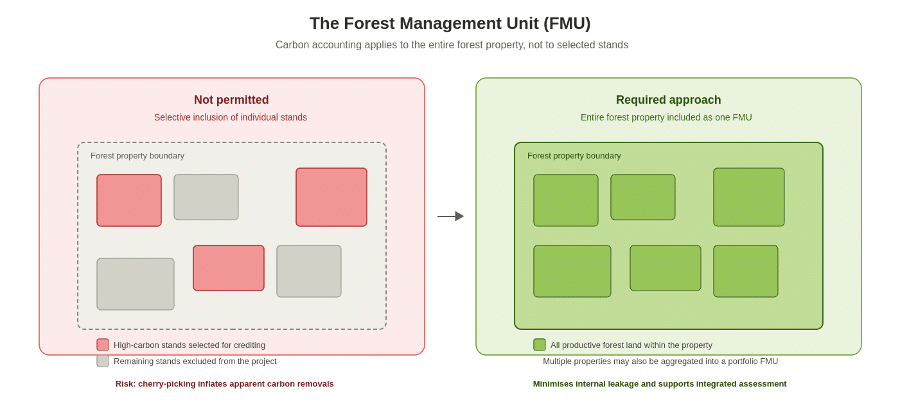
Figure 1. The Forest Management Unit concept: carbon accounting applies to the entire property, not to selectively chosen stands.
Formally protected nature areas subject to a legally binding prohibition on active management are excluded from both the activity boundary and the baseline boundary. This exclusion reflects that reliable data on forest development — inventory updates, harvest notifications, growth monitoring — is typically not maintained for areas where active management is legally prohibited, making credible quantification of either scenario’s development in those areas impractical. This exclusion is distinct from, and must not be used as a basis for, the selective inclusion of manageable stands to maximise certified removals (Section 3.3): the FMU must still comprise the entire manageable forest property, and only legally unmanageable protected areas are excluded from it. This exclusion is also distinct from voluntary set-asides under the Sustainability and Co-Benefit Guidance, which remain within the activity boundary precisely because their persistence must be actively monitored and enforced as a condition of certification (Sustainability and Co-Benefit Guidance Section 3.2) — unlike formally protected areas, whose legal status already ensures persistence independent of this scheme.
4.2 Greenhouse gas boundary
The methodology focuses on carbon stock changes in living tree biomass, which is the carbon pool expected to be subject to the most significant and most reliably measurable change as a result of the activity. Other carbon pools, such as deadwood, litter and soil organic carbon, are generally not included, reflecting both their lower sensitivity to the type of management changes addressed by this methodology and the practical difficulty of measuring them reliably at the scale of individual properties.
Where a specific pool, such as aboveground non-tree woody biomass, is expected to be subject to significant decrease as a result of activities under the activity (for example due to intensive site preparation), it shall be included in the activity scenario. Emissions associated with silvicultural operations are also accounted for, to ensure that the net climate benefit of the activity is correctly represented.
The detailed list of included and excluded carbon pools, together with the justification for each, is set out in the Quantification Guidance Document referred to in Annex 1.
5. Additionality
5.1 Objective
The purpose of the additionality requirements is to ensure that certified carbon removals represent genuine improvements in forest management relative to what would otherwise have occurred. Additionality is the principle that distinguishes a credible carbon removal from a removal that would have happened regardless of carbon revenue.
5.2 General principle
An activity is additional where the implementation of the activity, supported by carbon revenues, results in higher carbon stocks and higher carbon removals than would be expected under the baseline scenario. Additionality is assessed by comparing the activity scenario against this baseline scenario, rather than against historical management or against a generic regional average.
5.3 Financial and management additionality
Operators shall demonstrate that carbon revenues have a material influence on the management objectives applied within the FMU. This may be demonstrated through a documented change in management objectives, through the adoption of management measures that would not be economically rational in the absence of carbon revenue, or through other evidence considered relevant by the certification scheme.
The methodology does not require that the specific silvicultural practices applied are unusual or innovative. The relevant test is whether the resulting forest development trajectory differs materially, and favourably, from the baseline.
5.4 Regulatory additionality
Carbon removals that result solely from compliance with existing legal requirements are not additional and are not eligible for certification. Where legislation already requires a given management outcome, that outcome forms part of the baseline scenario rather than the activity scenario.
5.5 Role of regional cost and revenue information
Information regarding timber prices, harvesting and silvicultural costs, and other cost and revenue parameters prevailing in the geography where the activity is implemented may provide useful supporting evidence during baseline assessment. Such information helps confirm that the baseline scenario described in Chapter 6 reflects economically rational forest management under the market conditions actually faced by comparable forest owners in the region, in the absence of carbon revenue.
This regional cost and revenue information informs the economic assumptions underlying the baseline scenario; it is not, by itself, an eligibility criterion. Eligibility continues to be determined by the comparison between the activity scenario and the resulting baseline scenario described in Section 5.2, not by the prevalence of any individual management practice in the region.
5.6 Demonstration of additionality
Activities shall not be considered additional, and no carbon credits shall be issued, where any of the following apply:
1. the activity scenario is identical to the baseline scenario;
2. carbon removals result solely from legal requirements;
3. carbon revenues have no material influence on management objectives or decisions; or
4. the operator cannot demonstrate a measurable difference between the activity scenario and the baseline scenario.
6. Baseline Determination
6.1 Objective
The purpose of baseline determination is to establish a credible and conservative reference scenario against which additional carbon removals can be quantified. The baseline represents the forest development trajectory that would most likely occur in the absence of revenues from carbon credits.
The baseline serves multiple functions: it provides the reference for demonstrating additionality, for quantifying carbon removals, and for assessing activity performance over time. A robust baseline is therefore fundamental to the environmental integrity of certified carbon removals. The baseline shall be established, before certification, by an independent party engaged by the certification scheme or, where the operator has the necessary in-house capacity, by the operator’s own staff under the supervision of an independent expert appointed by the certification scheme (Baseline Guidance Document Section 3.2a). In either case, the baseline is documented in the Activity Plan and is subject to independent review during validation and certification (Section 6.5).
6.2 General principles
The baseline shall be forward-looking, activity-specific, based on the entire Forest Management Unit, consistent with applicable legislation, regionally adapted, economically rational and conservative.
The baseline shall represent the most likely management trajectory that would occur in the absence of carbon revenues. Historical management practices may provide relevant information regarding the characteristics of the FMU, but shall not by themselves determine future management behaviour. Forest management decisions are influenced by future expectations regarding timber markets, costs, legislation and productivity, and baseline determination shall therefore focus on expected future behaviour rather than past behaviour. Unlike approaches that compare a certified activity against a separate reference forest or matched control area, this methodology never relies on a different, physically distinct stand as its counterfactual. The baseline is a modelled projection for the same Forest Management Unit, the development that unit itself would most likely have followed absent carbon revenues (Section 6.3), not an external reference whose comparability would itself need to be established and defended. This avoids a validity problem inherent in reference-forest approaches: however precisely two distinct stands are measured, the comparison is only meaningful if they are genuinely comparable in all relevant respects, which is difficult to establish and defend in practice. Estimation precision (Sections 7.4–7.5) and reference validity are separate concerns; this methodology’s FMU, modelled-baseline design addresses the second by construction, leaving precision as the primary remaining source of uncertainty to be managed transparently, given the practical and economic constraints on measurement (Section 6.5).
6.3 Baseline scenario
The baseline scenario shall represent economically rational forest management conducted without revenues from carbon credits, describing the expected development of forest carbon stocks, growth and harvesting throughout the activity period. It shall include all management activities reasonably expected to occur under economically rational management, and shall be developed at the level of the FMU, covering all forest stands within the activity boundary.
The baseline shall represent the management trajectory that a rational economic actor would be expected to follow in the absence of carbon revenues and shall be internally consistent with realistic operational constraints.
6.4 Economic rationality
This methodology assumes that forest owners generally seek to manage forests in a manner that generates sustained economic value while complying with legal requirements and other ownership objectives. Economic rationality does not imply short-term profit maximisation; it refers to management decisions that seek to optimise the long-term economic value generated by the FMU under prevailing market conditions and applicable legal constraints.
The economic assumptions applied in baseline modelling shall be documented and justified. Detailed requirements regarding economic assumptions and modelling procedures are described in the Baseline Guidance Document referred to in Annex 1.
6.5 Data sources and the baseline development process
The baseline shall be based on forest inventory data representing the FMU at the start of the activity, originating from a forest management plan or equivalent inventory prepared by a qualified and independent provider using nationally recognised inventory methods.
The certification scheme, or its designated representatives, shall perform a plausibility assessment of the inventory data before baseline modelling, drawing where relevant on independent data sources such as airborne laser scanning, National Forest Inventory data, or other recognised forest information systems. The purpose of this assessment is not to replace the original forest inventory, but to identify material inconsistencies that could significantly affect baseline determination. This estimation precision is grounded in genuine field assessment, not extrapolation. The forest management plan is built by delineating the Forest Management Unit into treatment units (stands) based on an on-the-ground assessment of each unit’s condition, age, species composition, site quality, and standing volume etc., with each unit subsequently modelled according to its own assessed condition. This stand-based structure disaggregates the forest into units that are each internally consistent enough to be modelled on their own terms.
Achieving materially lower estimation error would require systematic, wall-to-wall field measurement of every stand at a frequency and detail that is not economically viable at the scale family forestry operates at; requiring it would undermine the same economics this methodology exists to serve (Section 1.7). The approach adopted here represents the most robust basis achievable within realistic cost constraints, and is not treated as a fixed ceiling: estimation precision is expected to improve over time as both remote sensing methods (airborne and satellite laser scanning, multispectral and radar-based estimation) and ground-based inventory methods continue to advance. As recognised data sources and methods improve, the achievable default SE (Quantification Guidance Document Section 7.3) is expected to decrease accordingly.
Baseline modelling shall be performed by a competent and independent party, using a modelling framework recognised under this methodology, subject to the exception set out in Section 6.1 for operators with in-house modelling capacity. Sweden’s well-developed forest data ecosystem, including national forest inventories, regionally calibrated growth and yield models, and nationwide laser scanning coverage, provides a strong basis for this modelling. The baseline report shall document input data, modelling assumptions, applied constraints, projections, and the resulting carbon stock and harvest trajectories, and shall be subject to independent review during validation and certification.
6.6 Modelling requirements
Baseline modelling shall be conducted using recognised forest growth and forest management planning systems capable of projecting forest development, harvesting activities and carbon stock changes over time. The modelling framework shall be scientifically sound, transparently documented, and suitable for long-term forest management planning under the ecological and economic conditions applicable to the FMU.
The modelling framework shall be capable of representing stand-level forest development, simulating management activities, estimating future harvest and carbon stock development, applying economic optimisation criteria, and incorporating legal and operational constraints. The party responsible for modelling shall document all assumptions applied, in a manner sufficiently transparent to allow independent review.
6.7 Legal and operational constraints
The baseline scenario shall reflect economically rational forest management that is feasible under applicable legislation and realistic operational conditions, including forest legislation, environmental legislation, protected areas, legally binding conservation requirements, and relevant restrictions associated with infrastructure, terrain or accessibility.
The baseline shall not assume management practices that are prohibited by law or clearly inconsistent with accepted professional forest management, nor practices that are technically unrealistic or economically unreasonable. The objective is not to identify a theoretical maximum harvest scenario, but to represent the most likely economically rational development trajectory in the absence of carbon revenues.
6.8 Sensitivity analysis
Because baseline projections depend on assumptions regarding biological development, management decisions and economic conditions, a sensitivity analysis shall be conducted as part of baseline determination to evaluate the robustness of baseline outcomes.
The sensitivity analysis shall assess the influence of key assumptions that may materially affect projected carbon stock development, harvest levels or optimisation outcomes, for example timber prices, and harvesting or silvicultural costs. Its purpose is not to replace the baseline scenario, but to evaluate whether reasonable variation in key assumptions produces materially different outcomes. Results shall be documented in the baseline report and available for independent review. Specific default assumptions and recommended sensitivity ranges are addressed in the Baseline Guidance Document, not in this methodology.
6.9 Conservative application of baseline results
This methodology certifies additional carbon removals resulting from the accumulation of new forest carbon stocks. It does not certify avoided losses of existing carbon stocks.
Consequently, carbon removals are only eligible where forest carbon stocks exceed both the trajectory projected under the baseline scenario and the carbon stock present at the start of the activity. The quantity of creditable removals is limited to the lower of these two comparisons. Where the baseline projects declining carbon stocks below the activity starting level, no removals are credited unless the activity carbon stock exceeds the initial level. This principle, illustrated in Figure 2, prevents the issuance of credits for merely avoiding future reductions in carbon stock.
Treatment following an accepted natural reversal
Where an accepted natural reversal under Section 9.9 reduces the Guaranteed Carbon Stock below the Forest Management Unit’s original starting stock, the disturbance-adjusted Guaranteed Carbon Stock then in force shall replace the original starting stock as the applicable stock floor for subsequent quantification. The original starting stock remains recorded as a historical reference but shall not prevent further issuance where the actual standing stock exceeds both the disturbance-adjusted baseline and the Guaranteed Carbon Stock applicable immediately before the proposed issuance. Following each subsequent issuance, the Guaranteed Carbon Stock shall be increased by the standing-volume equivalent of the newly issued certified removals in accordance with Sections 9.4–9.5.
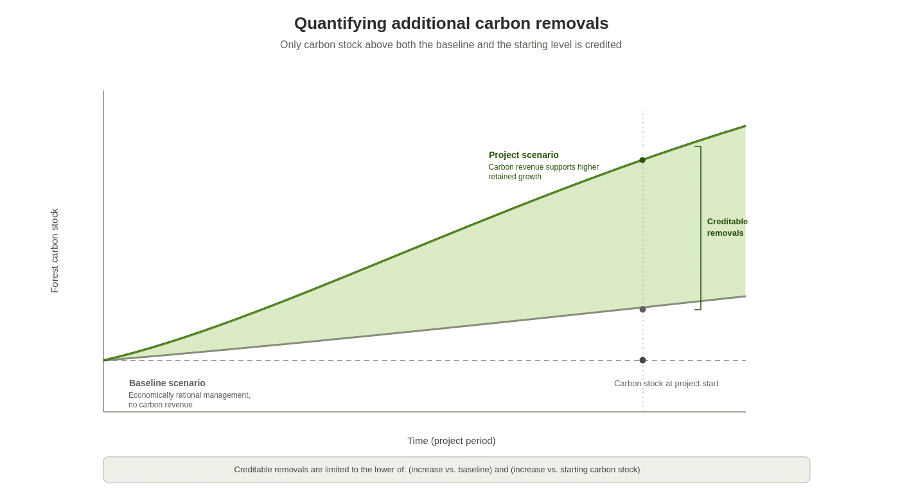
Figure 2. Carbon removals are only credited where the activity scenario exceeds both the baseline scenario and the carbon stock at activity start.
6.10 Baseline stability, review and updating
The baseline scenario shall be established prior to activity certification and shall remain fixed throughout the activity period, except where a natural reversal event triggers an event-specific baseline adjustment under Section 9.9. A stable baseline is necessary to ensure transparency, predictability and consistency in the quantification of carbon removals; allowing the baseline to change during the activity period other than in that defined circumstance would introduce uncertainty regarding additionality and could undermine environmental integrity.
Forest growth and harvest projections are typically developed using planning intervals extending over multiple years. The activity period shall therefore be of a duration sufficient to support robust baseline modelling and reliable assessment of activity performance, reflecting both the biological characteristics of forest ecosystems and the long-term nature of forest management decisions.
During the activity period, carbon removals are quantified relative to the baseline established at activity commencement. At the end of the activity period, a new activity period may be initiated, for which a new baseline is developed using updated inventory and economic information and the methodology requirements applicable at that time. The establishment of a new baseline does not affect carbon removals certified during previous activity periods. All baseline reviews and updates shall be documented and subject to independent validation and verification.
At the transition to a subsequent Activity Period, existing storage commitments shall remain in force for their remaining duration. Where the new baseline already incorporates stock supporting those commitments, that stock shall not be added a second time when calculating the Guaranteed Carbon Stock. During the subsequent Activity Period, the GCS shall be the higher of: (a) the remaining GCS obligation carried forward from preceding Activity Periods, reflecting applicable commitment expiries, permitted withdrawals and accepted reversal adjustments; and (b) the new baseline stock at the relevant time plus active certified removals issued during the subsequent Activity Period. Existing vintages and their remaining obligations shall remain separately traceable in the registry. This transition rule governs the application of Section 9.5 when a new baseline is established.
7. Quantification of Carbon Removals
7.1 Objective
The purpose of quantification is to determine the amount of additional carbon removals generated within the Forest Management Unit during the activity period. Quantification shall be based on transparent, scientifically sound and conservative methods capable of providing reliable estimates of carbon stock changes.
The methodology is designed for actively managed forests, where both forest growth and harvesting activities influence carbon stock development. Carbon removals are quantified relative to the baseline scenario established in accordance with Chapter 6, and only removals exceeding both the baseline scenario and the activity starting carbon stock are eligible for certification.
7.2 General quantification principles
Carbon removals are quantified at the level of the Forest Management Unit. The quantification approach shall:
1. reflect actual forest development;
2. account for verified harvesting activities;
3. be based on recognised forest inventory and modelling systems;
4. apply conservative assumptions where uncertainty exists; and
5. allow independent verification.
The methodology prioritises direct estimation of carbon stock changes through forest growth and verified harvesting activities. Periodic forest carbon stock estimates are used as an independent verification mechanism, providing a cross-check on the growth-and-harvest based approach described below.
7.3 Primary quantification approach
The primary quantification approach is based on the balance between forest growth and harvesting activities. For each Annual Quantification Period, the change in forest carbon stock is estimated from the modelled increment of the timber stock (gross growth less natural mortality), reduced by the verified actual harvest. This net change is then compared against both the corresponding development under the baseline scenario and the carbon stock at the start of the activity period, in accordance with the conservative principle set out in Section 6.9.
The net annual increase in standing timber volume eligible for crediting is limited to the lowest of these comparisons. This net increment is converted into carbon dioxide equivalents using standardised, conservative conversion factors based on national forest inventory data. Emissions associated with forest management operations, such as silvicultural interventions, are also accounted for and deducted from the activity scenario, so that the net climate benefit of the activity is correctly represented.
These operational emissions are deducted from the activity scenario only, and are not mirrored by an equivalent deduction from the baseline scenario, even though comparable management operations would also occur under the baseline. This asymmetry is a deliberate conservative simplification: in practice, the magnitude of these emissions is small relative to the carbon stock changes being quantified, and omitting a matching baseline deduction means that, if anything, certified removals are understated rather than overstated. The methodology accepts this minor conservative bias in order to avoid the added complexity of modelling operational emissions under both scenarios.
The specific conversion factors, modelling systems and calculation protocols used to implement this approach are set out in the Quantification Guidance Document referred to in Annex 1, rather than in this principle-level methodology.
7.4 Periodic stock verification
At appropriate intervals, and at minimum at the end of each activity period, the forest carbon stock shall be independently verified using field data, airborne laser scanning, national forest inventory data, or other relevant and recognised data sources. This periodic verification provides an independent check on the cumulative result of the annual growth-and-harvest accounting described in Section 7.3, supporting the weight-of-evidence approach introduced in Section 1.10.
This check compares the carbon stock obtained by carrying forward the starting carbon stock plus the accumulated annual net increment (growth less harvest) against an independent new estimate of the carbon stock at the end of the activity period. The carried-forward estimate’s uncertainty is dominated by growth model error, since harvest is measured with high precision (Section 7.3). Independent validation of the stand-level growth models underlying Swedish forest planning against National Forest Inventory permanent sample plots and long-term thinning trials has found a prediction error of approximately 15%, which does not increase with longer projection periods (Fahlvik, Elfving and Wikström 2014). Because this error applies to the increment itself rather than to the much larger absolute standing stock, the carried-forward estimate avoids the loss of precision that arises from differencing two independent absolute stock estimates to infer a comparatively small change: each such estimate carries its own error as a proportion of the full stock, and subtracting two large, independently uncertain figures to recover a small difference concentrates both absolute errors onto that small quantity. The independent stock estimate is correspondingly used as a plausibility check on the accumulated accounting, rather than as the primary source of quantification precision.
At the level of an individual FMU, this plausibility check has limited statistical power: the confidence interval of a single independent stock estimate is typically wide relative to the magnitude of the annual carbon stock change being verified, so the check will generally confirm consistency without being able to independently confirm the precise quantity of removals. Its primary purpose at FMU level is therefore to detect material inconsistencies, for example, a measurement, modelling or accounting error, rather than to independently validate the certified quantity. Section 7.5 discusses how this limitation can be addressed when results are considered across multiple activities.
7.5 Treatment of uncertainty
Operators shall demonstrate that the input data used for baseline modelling and carbon stock estimation are of sufficient quality to ensure reliable and reproducible results. The uncertainty associated with estimates of initial carbon stock, growth and harvesting shall be assessed and documented, and shall be sufficiently low to allow detection of meaningful change in carbon stock over the activity period.
Uncertainty in forest carbon estimates is an inherent feature of any forest measurement system, particularly at the level of an individual property. The methodology shall apply a conservative approach to uncertainty, such that estimation uncertainty does not result in the over-crediting of carbon removals. Where uncertainty is considered too high to support robust quantification for a given activity, the activity shall not be eligible for crediting unless additional data or improved measurement methods are applied.
7.5.1 The role of shared versus independent estimation error
Both the baseline scenario and the activity scenario rely on growth estimates derived from the same underlying growth and yield models, typically calibrated using the same or closely related data. As a result, a meaningful part of the estimation error in these growth projections is shared between the baseline and the activity scenario rather than independent. Because certified removals are calculated as a difference between the two scenarios, error components that are common to both cancel out in that difference and do not, by themselves, justify a deduction from certified removals.
The estimation error that does affect the reliability of certified removals is the part that is independent between the baseline and activity scenarios, or independent between properties, for example, stand-specific variation, local measurement error, or year-to-year weather effects that are not captured by the shared growth model. This independent component does not cancel out, and is the appropriate basis for any conservative deduction or confidence-based adjustment applied to certified removals.
7.5.2 Effect of aggregation across activities
The independent component of estimation error behaves differently from the shared component when results are considered across a portfolio of activities rather than for a single FMU in isolation. Where estimation errors are independent between properties, their relative contribution to the uncertainty of the aggregated portfolio result decreases as the number of properties increases, broadly in proportion to the square root of the number of properties. This means that a plausibility check of the kind described in Section 7.4, which has limited statistical power for a single FMU, can become considerably more informative when applied to the combined result across many activities.
This improvement applies only to the independent component of estimation error. Any error that is systematically shared across activities, for example, a regional bias in a growth model that is applied uniformly across many properties of a similar forest type, does not diminish with aggregation, however many activities are included. The reliability of aggregated results therefore depends on the relative size of these two components, which is an empirical question that can only be answered with reference to actual data across regions, forest types and growth models, rather than assumed at the level of this methodology.
8. Monitoring, Reporting and Verification
8.1 Objective
The purpose of this chapter is to ensure that the development of forest carbon stocks, and the activity’s continued compliance with the requirements of this methodology, can be reliably monitored, reported and independently verified throughout the activity period and any applicable storage commitment periods.
8.2 Submission of the activity scenario
The operator, or a representative acting on their behalf, shall submit a structured description of the proposed activity scenario, including how the growing stock is expected to develop over time and which management measures will be implemented to achieve this outcome. The submission shall include the forest data and supporting documentation necessary to assess the activity, consistent with the data requirements set out in Chapter 3.
The submitted activity scenario shall be subject to a review and quality control process, assessing the completeness, consistency and plausibility of the data provided, including comparison against independent data sources such as national forest data or airborne laser scanning. Where necessary, this review may be supported or carried out by an independent third-party expert, operating under the predefined methodological framework and without influence from the operator.
8.3 Annual monitoring
Activity performance shall be monitored on an annual basis: the activity scenario’s net increment for the period, modelled growth less verified actual harvest, is compared against the baseline scenario’s net increment for the same period, in accordance with the quantification approach described in Chapter 7.
Harvest information used for monitoring shall be supported by independently verifiable records whenever such records are available. Monitoring may draw on updated forest management plans, airborne laser scanning and national forest information systems, National Forest Inventory data, independent field inventories, remote sensing products, and other recognised sources of forest information, consistent with the weight-of-evidence approach described in Section 1.10.
8.4 Periodic verification
At intervals not exceeding ten years, including at the end of each Activity Period, the Forest Management Unit shall undergo a Periodic Full Verification. The verification shall include an independent assessment of the actual standing growing stock and reconciliation of that stock with the accumulated stock development derived from the starting growing stock plus modelled annual growth minus verified annual harvests. The assessment shall take account of the applicable confidence interval and uncertainty requirements and shall confirm whether the Guaranteed Carbon Stock commitment described in Chapter 9 continues to be met.
Where additional information is required to assess compliance, the certification scheme may require supplementary inventories, field assessments, or other verification activities at the expense of the operator. All significant monitoring decisions shall be documented and made available for independent review.
8.5 Responsibility for monitoring
Responsibility for monitoring compliance with this methodology rests with the certification scheme. The operator shall provide information necessary to support monitoring activities, including information relating to harvesting activities, disturbances, and other events capable of affecting forest carbon stocks.
8.6 Closure of monitoring obligations
Monitoring obligations remain in force throughout all applicable storage commitment periods. At the end of the relevant commitment period, obligations relating to the corresponding certified removals cease, provided that all certification requirements have been fulfilled and any outstanding deficits or liabilities have been resolved. The closure of monitoring obligations shall be documented by the certification scheme, and does not affect the validity of carbon removals previously certified.
9. Long-Term Storage, Risk Management and Reversals
9.1 Objective
The purpose of this chapter is to ensure that certified carbon removals are maintained over time, and that the methodology provides a credible and transparent approach to managing the risk that previously certified removals may be lost, whether through natural disturbance or through non-compliance by the operator.
9.2 Permanence as a time-bound concept
Nature-based carbon removals are inherently subject to the risk of reversal, for example through fire, pests, windthrow or harvesting. This methodology does not treat permanence as an absolute or indefinite guarantee. Instead, carbon removals are certified for storage over a defined commitment period, and the climate benefit is accounted for accordingly.
This time-bound approach allows market participants to compare credits transparently and to construct compensation strategies appropriate to their own circumstances, including where credits with shorter storage durations are used as part of a broader portfolio.
9.3 Commitment and monitoring periods
For forestry activities, the monitoring period corresponds to the commitment period during which the permanence of certified carbon removals is guaranteed. Monitoring is carried out by Carbon Capture Company or an approved certification body for as long as the commitment period remains in force.
The length of the commitment period is agreed between the operator and the certification scheme, and may vary between activities depending on their nature and the preferences of the parties involved. For activities in Sweden, the commitment period shall not exceed forty-nine years, reflecting the statutory limitation applicable to certain long-term rights relating to real property under Chapter 7, Section 5 of the Swedish Land Code (1970:994), under which such rights are generally not binding for more than fifty years. At the start of an activity, the possibility to renew the commitment period for successive terms should be agreed where relevant.
The carbon stock forming the basis for credits issued in a given year does not only represent carbon captured that year: the carbon stock at the end of the activity period also carries a guaranteed permanence obligation throughout the monitoring period, so that the permanence of earlier years’ removals is reinforced as the activity continues.
9.4 The guaranteed carbon stock
Each issuance of certified carbon removals establishes a corresponding storage commitment. The Guaranteed Carbon Stock is the minimum physical carbon stock that must be maintained throughout the applicable commitment period. It comprises the standing timber volume under the approved baseline scenario at the relevant time together with the additional certified stock for which storage commitments remain active (Section 9.5). It therefore follows any increase in the baseline stock and shall not be undershot during the monitoring period, subject to the provisions for accepted natural reversals in Section 9.9.
Under no circumstances shall the actual carbon stock of the Forest Management Unit fall below the guaranteed carbon stock as a result of non-compliance by the operator. The guaranteed carbon stock is the primary mechanism used by this methodology to secure the long-term storage of certified carbon removals, and compliance with it is verified throughout the monitoring period.
9.5 Dynamic guaranteed carbon stock
The Guaranteed Carbon Stock follows the approved baseline stock trajectory, with an additional component representing certified removals for which storage commitments remain active. It changes as the baseline stock develops, additional removals are certified, credits are validly withdrawn without use, or storage commitments expire. Adjustments following accepted natural reversals are governed by Section 9.9.
Formally, GCS(t) = B(t) + Σ(v ∈ active vintages at t) ΔVᵥ, where B(t) is the standing timber volume under the approved baseline scenario at time t, in m³sk. Where baseline determination results in a flat baseline, B(t) equals the Forest Management Unit’s starting stock. Where the approved baseline has a positive slope, B(t) follows that rising trajectory.
ΔVᵥ is the standing-volume equivalent, in m³sk, of the additional certified removal issued for vintage v, calculated using the conversion factor applicable to that vintage, from the total quantity issued for that vintage, comprising both the sellable credits and the buffer contribution, after the SE-based deduction and market leakage deduction (Quantification Guidance Document Section 7.7). A vintage remains active for the duration of its storage commitment. Adjustments following an accepted natural reversal are governed by Section 9.9.
A vintage is active while its own storage commitment has not yet expired; once it expires, that vintage’s ΔVᵥ drops out of the sum even as later vintages’ obligations continue or new ones begin. Because credits issued in successive years create separate, overlapping obligations with their own expiry dates, the guaranteed carbon stock is a dynamic value reflecting these overlapping annual vintages. The certification scheme shall maintain records documenting the relationship between certified removals, storage commitments and the resulting guaranteed carbon stock.
ΔVᵥ may be reduced where issued credits are permanently withdrawn from circulation without being used for any climate claim, in accordance with the applicable registry and transaction rules (Guaranteed Carbon Stock and Buffer Guidance Section 3.2; Quantification Guidance Document Section 7.7). Credits retired by or on behalf of a buyer for a climate claim shall remain included in ΔVᵥ throughout their applicable storage commitment period.
Where a new baseline is established (Baseline Guidance Document Section 8), the operator may elect to certify some or all of any verified surplus of actual standing stock above the Guaranteed Carbon Stock then in effect, following the process in Guaranteed Carbon Stock and Buffer Guidance Section 3.4.
9.6 Allocation to properties within a portfolio FMU
Where an FMU consists of multiple properties, the certification scheme shall maintain records sufficient to allocate active guaranteed carbon stock commitments to the properties contributing to those commitments, so that storage obligations remain traceable if properties are sold, transferred, or otherwise affected by ownership changes.
Where a property is transferred and the new owner assumes the storage commitment, the corresponding share of the guaranteed carbon stock continues to apply to that property. Where the new owner does not assume the commitment, the associated obligation shall be resolved through replacement, cancellation, or another measure approved by the certification scheme.
9.7 Risk assessment
Prior to certification, a risk assessment shall be conducted for each FMU, considering relevant natural and operational risks capable of causing significant carbon stock losses, including wildfire, storm damage, insect outbreaks, drought, snow damage and disease, as well as factors affecting forest resilience such as species composition, age-class distribution, management intensity and site conditions. The results shall be documented in the Activity Plan and considered when determining appropriate management and monitoring measures.
The same risk factors, data sources and assessment principles shall be applied consistently to both the activity scenario and the baseline scenario. Risks that would also affect the FMU under the baseline scenario shall not be treated as if they were specific to the activity, and shall not be used to justify a more cautious treatment of the activity scenario than of the baseline scenario. This consistency is necessary to ensure that the risk assessment informs management and monitoring decisions without distorting the comparison between the two scenarios on which additionality and quantification depend.
9.8 Buffer reserve
A proportion of all certified carbon removals shall be allocated to a buffer reserve, normally operated as a common pool across all activities and vintages certified under this Methodology, intended to protect the environmental integrity of previously certified removals against involuntary reversal resulting from natural disturbances beyond the operator’s control. Where an operator demonstrates sufficient scale and internal geographic diversification, a dedicated pool covering only that operator’s own activities may be permitted in place of the common pool, on conditions specified in the Guaranteed Carbon Stock and Buffer Guidance. In either structure, the buffer reserve shall not be sold, transferred or claimed as carbon removals.
Within whichever pool applies, the buffer reserve operates across time and across activities: credits issued earlier are protected not only by their own contribution, but also by the contributions of credits issued later within the same pool, so that the pool of risk coverage grows as more activities and vintages are added to it. The buffer reserve applies exclusively to certified additional carbon removals; it does not compensate for losses affecting carbon stocks that were never certified, nor for deliberate management decisions or failures to comply with activity obligations, which are addressed in Section 9.10.
9.9 Natural reversal events
A natural reversal event occurs when a disturbance beyond the reasonable control of the operator results in a reduction of certified additional carbon removals. Examples include wildfire, storm damage, insect outbreaks, drought-related mortality and disease.
Where a natural reversal event occurs, the loss of certified additional carbon removals shall be quantified in proportion to the loss of total forest carbon stock: the same proportion of the active certified additional removals is treated as reversed as was genuinely lost from the actual total standing stock (the whole forest carbon stock physically present immediately before the disturbance). For example, if 25% of the actual total stock was lost, 25% of the active certified additional removals are treated as reversed. This is not the same quantity as the Guaranteed Carbon Stock (Bt + ΔVₐ, Guaranteed Carbon Stock and Buffer Guidance Section 3.2), which is a certified floor and may be lower than the actual physical stock; the loss fraction shall be assessed against the actual stock, independently verified where possible, not against the GCS figure. This proportional approach reflects that carbon in a standing forest is not physically separable into a ”baseline” component and an ”additional” component, only the modelled quantities are separable, not the trees themselves, so a disturbance affecting the stand is taken to affect both components in proportion to their share of the total. The assessment shall use the best available evidence, drawing where relevant on National Forest Inventory data, national forest monitoring systems, airborne laser scanning, remote sensing, field assessments and forest management plans.
Where the operator cannot fully address the disturbance through ordinary salvage harvesting and Category 1 handling under the Guaranteed Carbon Stock and Buffer Guidance (that is, where the event is extreme and beyond the operator’s control) the operator may apply to the certification scheme for the disturbance to be treated as a natural reversal event under this Section. Where the application is accepted, three consequences follow together, as a single package, effective from the point of the disturbance: the baseline is disturbance-adjusted, not reset to the activity’s actual post-event stock, to reflect the stock loss that would reasonably have occurred under the same disturbance in the baseline scenario, normally by reducing the baseline in the same proportion as the actual loss (Baseline Guidance Document Section 8.4), unless the operator demonstrates that the activity itself has materially changed the stand’s vulnerability to the disturbance, or the disturbance has materially altered the stand’s physical or biological characteristics such that the growth model underlying the baseline no longer reliably predicts its future development, in which case a different, documented adjustment — which may include recalculating the baseline’s long-term growth trajectory, not only its starting volume — applies; the guaranteed carbon stock is written down in the same proportion as the loss (Guaranteed Carbon Stock and Buffer Guidance Section 6.3); and the resulting reversal liability corresponding to the reversed share of active certified additional removals is compensated through the buffer reserve, in accordance with the rules established by the certification scheme (Guaranteed Carbon Stock and Buffer Guidance Section 6). Resetting the baseline to the activity’s actual post-event stock would be incorrect: it would treat the entire loss as a loss of additionality, when only the proportion of the stock genuinely lost was ever at risk. This is an event-triggered adjustment within the ongoing activity period, distinct from the periodic re-baselining cycle in Section 6.10: it does not end the activity period or begin a new one, and it does not affect carbon removals already certified before the event.
9.10 Non-compliance with the guaranteed carbon stock commitment
Non-compliance occurs when the operator intentionally or negligently causes the actual carbon stock of the FMU to fall below the guaranteed carbon stock, for example through harvesting beyond permitted levels, management decisions resulting in avoidable carbon stock reductions, or failure to implement required corrective measures. Non-compliance is not treated as a natural reversal event, and the buffer reserve shall not be used to compensate for deficits resulting from it.
Where non-compliance occurs, the operator shall be required to restore the deficit through management actions capable of rebuilding the carbon stock above the guaranteed level. Where restoration is not achieved within the period specified by the certification scheme, the operator shall compensate for the deficit by surrendering or replacing an equivalent quantity of certified carbon removals from other certified activities of equivalent quality and permanence. This obligation remains in force until the deficit has been fully resolved.
9.11 Corrective measures
Where carbon stock losses occur, appropriate corrective measures shall be implemented to restore compliance with activity requirements, which may include modified harvesting plans, enhanced regeneration activities, forest restoration measures, silvicultural interventions or climate adaptation measures. Selected measures shall be documented and subject to verification. The implementation of corrective measures does not automatically restore previously certified carbon removals unless the relevant carbon stocks are subsequently re-established and verified.
10. Sustainability Requirements and Co-Benefits
10.1 Objective
The purpose of this chapter is to ensure that certified carbon removals are generated in a manner consistent with sustainable forest management, and that activities under this methodology contribute positively to the long-term ecological functioning of the forest landscape.
Carbon removals certified under this methodology shall be achieved without causing significant harm to biodiversity, soil resources, water resources or the long-term productive capacity of the forest ecosystem. The methodology further seeks to encourage management approaches that strengthen forest resilience and adaptive capacity under changing climatic conditions.
10.2 General sustainability principles
All activities shall comply with applicable legislation and regulatory requirements. Activity implementation shall maintain or enhance the long-term capacity of the forest ecosystem to provide carbon removals, renewable forest products, biodiversity values, climate adaptation, water-related ecosystem services and other relevant ecosystem services.
Carbon removal activities have strong potential to deliver win-win outcomes for sustainability, although trade-offs cannot be excluded in every case. The methodology therefore applies minimum sustainability requirements intended to ensure that carbon removal activities have a neutral impact on, or generate co-benefits for, climate change mitigation and adaptation, the protection and restoration of biodiversity and ecosystems, the sustainable use and protection of water resources, and the transition to a circular economy.
The biodiversity co-benefit requirement may be fulfilled by maintaining existing qualifying conservation measures, including voluntary set-asides that meet the requirements of this methodology and the Sustainability and Co-Benefit Guidance. Operators already meeting those requirements are not required to establish additional set-asides or introduce further biodiversity measures solely for certification, provided that continued compliance is demonstrated and verified.
10.3 Biodiversity co-benefits
Biodiversity co-benefits shall be considered and documented at the level of the Forest Management Unit, taking into account the contribution of the FMU as a whole, including production forests, voluntary set-asides, retention areas, and forests managed primarily for conservation purposes.
Biodiversity outcomes are evaluated at the landscape level, rather than solely at the level of individual stands or interventions, reflecting the understanding that biodiversity is influenced by the composition, structure and management of the forest landscape as a whole. As part of this methodology, activities are expected to maintain a meaningful share of productive forest land within the FMU as voluntary set-aside for nature conservation purposes; the specific minimum share, and how it is measured, is addressed in Section 10.4 and in supporting guidance.
10.4 Demonstrating compliance with biodiversity requirements
Sweden already has established sustainability certification schemes for forestry, including FSC and PEFC. Where current FSC or PEFC certification covers the relevant Forest Management Unit, such certification may be used as supporting evidence for biodiversity safeguards and management practices that are demonstrably covered by the relevant certification scheme. FSC or PEFC certification does not replace the separate voluntary set-aside requirement established under this Methodology and the Sustainability and Co-Benefit Guidance, nor does it establish a reference level or floor from which that requirement is calculated. Existing voluntary set-asides maintained under FSC or PEFC may count toward the Methodology’s set-aside requirement where they meet the applicable qualifying criteria. Evidence that the FSC or PEFC certification is current and covers the relevant Forest Management Unit shall be provided and subject to verification. All operators shall demonstrate compliance with the voluntary set-aside requirement through documented evidence based on mapped set-asides and biodiversity planning. Where current FSC or PEFC certification covers the relevant Forest Management Unit, documentation and evidence generated under that scheme may be used to demonstrate corresponding elements of compliance, provided that the evidence is sufficient for the purposes of this Methodology. As a matter of principle, this includes:
1. identification and mapping of set-aside areas, including any high-biodiversity zones, riparian buffers and retention stands;
2. a description of the existing ecological values within these areas, including relevant species, habitat types and conservation functions; and
3. an outline of planned management actions intended to maintain or enhance biodiversity within the FMU.
The evidence submitted under this Section shall be subject to independent verification, which may include review of FSC or PEFC records where applicable, third-party audits, remote sensing tools and field inspections, in order to maintain credibility while keeping the administrative burden on operators proportionate. The detailed format of the evidence, and the specific verification procedures applied, are addressed in supporting guidance rather than in this Methodology.
10.5 Soil and water resources
The activity shall not cause significant harm to soil resources or water resources. Operators shall comply with applicable requirements relating to soil protection, water protection, harvesting operations, regeneration activities and forest infrastructure. The certification scheme may require additional information where significant risks to soil or water resources are identified.
10.6 Climate adaptation and forest resilience
The activity shall support the long-term capacity of forests to maintain carbon removals under changing climatic conditions. Increased forest carbon stocks alone do not guarantee long-term climate benefits; forest resilience and adaptive capacity are therefore important components of sustainable forest management under this methodology.
Operators shall consider relevant climate-related risks, including drought, storm damage, wildfire, insect outbreaks and disease. Management approaches that strengthen long-term resilience and adaptive capacity are encouraged, such as diversification of species composition, adaptation of regeneration strategies, and other risk management measures. The methodology does not prescribe specific adaptation measures; responsibility for selecting appropriate approaches remains with the operator.
10.7 Maintenance of productive capacity
The activity shall maintain or enhance the long-term productive capacity of the forest resource. Carbon removals shall not be achieved through management approaches that significantly impair future forest growth or the long-term ability of the forest to provide renewable biomass and ecosystem services.
Operators shall demonstrate, through forward-looking modelling and comparison between the activity scenario and the baseline scenario as described in Chapter 6, that the activity does not result in a systematic decline in productive capacity. The activity scenario may involve temporal adjustments in harvesting levels, provided that such changes do not lead to a persistent reduction in growth or in the long-term availability of forest resources. This assessment shall be based on the same data, modelling framework and assumptions used for baseline determination, and shall be subject to independent review. Activities that result in materially reduced long-term growth or that materially constrain future wood supply are not eligible under this methodology.
10.8 Demonstration of co-benefits
The Activity Plan shall include a description of expected biodiversity and climate adaptation co-benefits associated with the activity. Monitoring activities shall document significant developments relevant to sustainability requirements throughout the activity period, and the certification scheme shall evaluate whether activity implementation remains consistent with the sustainability requirements established under this methodology.
10.9 Social safeguards and respect for rights
Activities shall comply with applicable Swedish and EU law and respect internationally recognised human rights and fundamental labour rights. Operators shall ensure that work undertaken for the activity, including by contractors, meets applicable requirements concerning employment conditions, occupational health and safety, non-discrimination, freedom of association and collective bargaining. Forced labour and unlawful child labour are prohibited.
Activities shall respect the rights of affected Indigenous Peoples and local communities, including Sámi rights and reindeer husbandry rights where relevant. Operators shall identify potentially affected rights holders and assess whether the activity could adversely affect their land use, livelihoods, access to resources or cultural heritage. Meaningful engagement shall take place before measures affecting those interests are implemented. Where Indigenous Peoples’ rights may be affected, applicable requirements for free, prior and informed consent shall be identified and fulfilled.
Valid FSC or PEFC forest management certification covering the relevant Forest Management Unit, including documented membership of a certified group, shall normally be accepted as evidence of compliance with the social safeguards in this section. Operators shall not be required to duplicate assessments or documentation already adequately covered by that certification.
Supplementary evidence shall be required only where a specific requirement is not covered by the certification, where the carbon activity introduces additional social risks, or where credible information indicates non-compliance. Any supplementary assessment shall be limited to the matter concerned. Operators without such certification shall demonstrate compliance through equivalent documented evidence. Relevant risks, measures and supporting evidence shall be documented in the Activity Plan or referenced supporting records and shall be subject to independent assessment proportionate to the nature, scale and risks of the activity.
Affected persons shall have access to CCC’s complaints and appeals procedure without retaliation.
11. Leakage
Leakage is defined as the unintended increase in greenhouse gas emissions, or reduction in carbon stocks, outside the activity boundary as a result of the activity. This methodology distinguishes between internal leakage and market leakage.
Internal leakage, for example shifting harvesting activities within the same forest holding to a part of the property outside the activity boundary, is addressed by the requirement, set out in Chapter 4, that the entire Forest Management Unit is included within the activity boundary. This ensures that changes in harvesting cannot simply be displaced within the same ownership.
11.1 The methodology’s design response to market leakage
Before considering how unattributed market effects are treated, it is important to recognise that this methodology is specifically designed to increase forest capital and future biomass production, rather than to reduce productive capacity or permanently withdraw wood supply from the market. This design choice is the methodology’s primary safeguard against market leakage, and precedes any discussion of residual, unattributable effects.
As set out in Chapter 2, carbon removals under this methodology are achieved by raising the economically optimal level of forest capital, not by reducing current harvesting levels relative to prevailing management. As growing stock increases, annual growth typically increases as well, which over time supports both higher carbon stocks and higher sustainable harvest levels than would otherwise be available. The methodology therefore seeks to increase, rather than diminish, the long-term wood supply potential of certified forests, directly counteracting the mechanism through which market leakage would otherwise arise.
Market leakage may nonetheless occur through broader changes in supply and demand for forest products: reduced harvesting in one location may, in principle, lead to increased harvesting elsewhere. Such effects are driven by complex and global market dynamics, including price responses, substitution between materials, and policy developments, which cannot be reliably quantified or attributed to individual forest activities. Attempting to do so would require highly uncertain assumptions about global market behaviour that are not verifiable at the activity level.
This residual, system-level form of market leakage is therefore not, in itself, attributable to any individual activity under this methodology. The design described above (increasing forest capital and future biomass production rather than reducing it) substantially reduces the scale of this risk relative to activities that achieve carbon removals primarily by reducing harvest.
11.2 Conservative market leakage deduction
Notwithstanding the design response described in Section 11.1, this methodology applies a conservative market leakage deduction to certified carbon removals. A proportion of the carbon removals that would otherwise be certified is deducted to reflect the residual possibility that part of any change in harvesting behaviour within the FMU is offset by increased harvesting elsewhere.
This deduction reflects a considered judgement that the risk of market leakage under this methodology is small, but not zero. Because the methodology does not require a reduction in current harvesting levels and is designed to increase long-term wood supply, the residual leakage risk is expected to be substantially lower than for activities that rely primarily on reduced harvest to generate removals, a category for which other voluntary carbon market programmes have applied market leakage discounts of up to several tens of per cent. A standard deduction of ten per cent of certified carbon removals is adopted at the level of this principle-level methodology, applied uniformly rather than estimated on a project-by-project basis, in order to keep the approach simple, transparent and conservative.
The market leakage deduction described in this section is separate from, and additional to, the buffer reserve described in Section 9.8, which addresses the risk of natural reversal rather than market leakage. The detailed mechanics of how the deduction is applied (for example, whether at issuance or at a later verification stage) are addressed in the Quantification Guidance Document referred to in Annex 1.
12. Certification and Issuance
12.1 Objective
The purpose of certification is to ensure that carbon removals are quantified, verified and recorded in accordance with the requirements of this methodology and the Carbon Forestry Standard, providing assurance that issued carbon removals represent verified and additional carbon removals generated within the Forest Management Unit. Certification shall be conducted in a transparent, consistent and independently reviewable manner.
12.2 Application for certification
The operator shall submit an application for certification together with an Activity Plan and the information required to assess compliance with this methodology, including information sufficient to allow assessment of activity eligibility, FMU boundaries, baseline determination, carbon accounting, sustainability requirements, monitoring arrangements and long-term storage commitments. The certification scheme may request additional information where necessary.
12.3 Validation
Prior to certification, the activity shall undergo validation, intended to confirm that the activity satisfies eligibility requirements, that the Activity Plan is complete, that the baseline has been established in accordance with the methodology, that proposed monitoring arrangements are adequate, and that sustainability requirements are fulfilled. Validation shall be completed before carbon removals become eligible for certification, and its outcome shall be documented.
12.4 Verification
Carbon removals shall be independently verified prior to issuance. For each Annual Quantification Period, verification shall confirm that reported harvest data have been correctly derived from independent records and that annual carbon removals have been calculated in accordance with the Quantification Guidance Document using the applicable modelled growth.
At intervals not exceeding ten years, a Periodic Full Verification shall include an independent assessment of the standing growing stock of the Forest Management Unit. The resulting stock estimate shall be reconciled with the accumulated stock development derived from the starting growing stock plus modelled annual growth minus verified annual harvests, taking account of the applicable confidence interval and uncertainty requirements.
The Periodic Full Verification shall also assess continued compliance with the Methodology, including monitoring, long-term storage and sustainability requirements.
12.5 Certification decision
The certification scheme shall determine whether the activity complies with the requirements of this methodology and the Carbon Forestry Standard. Where compliance is demonstrated, the certification scheme may approve the issuance of certified carbon removals. Where deficiencies are identified, corrective actions may be required prior to certification, and the certification scheme may suspend, reject or withdraw certification where significant non-compliance is identified. All certification decisions shall be documented.
12.6 Issuance of certified carbon removals
Certified carbon removals may only be issued for verified carbon removals quantified in accordance with this methodology, on the basis of removals that exceed the baseline scenario, exceed the activity starting carbon stock, have been verified, and comply with all relevant activity requirements.
No carbon removals shall be issued for avoided losses of existing carbon stocks, projected future removals, unverified carbon stock increases, or climate benefits outside the scope of this methodology. Certified carbon removals shall be issued ex post.
12.7 Registration
All certified carbon removals shall be recorded in a registry maintained or recognised by the certification scheme, containing information sufficient to ensure transparency, traceability and the avoidance of double counting. Registry records shall include, where applicable, activity identification, issuance date, quantity of certified removals, applicable storage commitment period, credit status, and retirement or cancellation information, maintained throughout the relevant commitment and monitoring periods.
The CRCF Regulation envisages the establishment of a Union registry for certified carbon removals. Pending the operational availability of that Union registry, Carbon Capture Company maintains its own registry, meeting the requirements set out above. Certified carbon removals issued under this Methodology before any future recognition of the certification scheme under the CRCF will remain recorded in the CCC registry and shall not be represented as CRCF-certified units. Following any future recognition of the certification scheme under the CRCF, units certified in accordance with the applicable CRCF requirements will be registered in accordance with the Union registry rules then in force.
12.8 Transfer, retirement and cancellation
Certified carbon removals may be transferred, retired or cancelled in accordance with the rules established by the certification scheme. Retired carbon removals shall not be transferred or claimed again, and cancelled carbon removals shall be permanently removed from circulation. The registry shall maintain transparent records of all transfers, retirements and cancellations.
12.9 Complaints and appeals
The certification scheme shall maintain procedures for the submission and resolution of complaints and appeals, accessible to operators and other relevant stakeholders, and shall document the handling and resolution of such complaints and appeals.
12.10 Record retention
Documentation relating to validation, verification, certification, issuance, monitoring and registry activities shall be retained for the duration specified by the certification scheme, in a manner that enables independent review and audit, and shall remain available throughout the applicable activity period, commitment period and monitoring period.
13. Definitions
This glossary summarises the key terms used throughout this methodology. A complete set of definitions, consistent with the Carbon Forestry Standard, will accompany the mapping document referred to in the front matter of this methodology.
| Activity | The Improved Forest Management activity implemented within a Forest Management Unit under this methodology. The term Activity is used consistently with the terminology of the CRCF Regulation and is equivalent to the term Project as commonly used in other voluntary carbon market standards (for example Verra and Gold Standard). |
|---|---|
| Activity Period | The period during which carbon removals are quantified and may be certified under a defined baseline scenario, of default length ten years (Baseline Guidance Document Section 8.1). An activity may be extended beyond its initial Activity Period through one or more subsequent Activity Periods, each established through re-baselining in accordance with Section 6.10. |
| Activity Plan | The activity-specific document describing the Forest Management Unit, baseline scenario, activity scenario, monitoring arrangements, sustainability considerations and long-term storage commitments. |
| Activity Scenario | The forest development trajectory resulting from implementation of the activity. |
| Additional Carbon Removal | A verified increase in forest carbon stocks that exceeds both the baseline carbon stock trajectory and the carbon stock present at activity commencement. |
| Annual Quantification Period | The one-year period for which carbon removals are quantified and, where eligible, issued as certified carbon removals (Section 7.3). An Activity Period comprises a sequence of Annual Quantification Periods, each producing its own credit vintage. |
| Baseline / Baseline Scenario | The most likely forest development trajectory, and its quantified projection, under economically rational forest management in the absence of revenues from carbon credits. |
| Carbon Credit | A registry unit representing one tonne of verified and certified carbon dioxide equivalent removed from the atmosphere in accordance with this methodology. |
| Carbon Stock | The quantity of carbon stored in living forest biomass within the Forest Management Unit. |
| Certification Scheme | The organisation responsible for administering the standard, methodology, registry, monitoring requirements and certification procedures. |
| Certified Carbon Removal | A carbon removal that has been validated, verified and issued under the certification scheme. |
| Commitment Period | The period during which certified carbon removals are subject to a long-term storage obligation. For activities in Sweden, the Commitment Period shall not exceed forty-nine years, reflecting the statutory limitation applicable to certain long-term rights relating to real property under Chapter 7, Section 5 of the Swedish Land Code (1970:994), under which such rights are generally not binding for more than fifty years (Section 9.3). |
| Dynamic Guaranteed Carbon Stock | The quantity of carbon stock required to support all active storage commitments associated with certified carbon removals at a given point in time. |
| Economically Rational Forest Management | Forest management that seeks to optimise long-term economic value under prevailing market conditions while complying with applicable legislation and operational constraints. |
| Forest Capital | The standing forest resource represented by growing stock, productive capacity, future growth potential and associated carbon stocks within a Forest Management Unit. |
| Forest Growth | The annual increase in living forest biomass after deduction of natural mortality and other natural losses, but before deduction of harvesting activities. |
| Forest Management Unit (FMU) | The accounting unit used for certification under this methodology, consisting of the entire forest property under an operator’s control, or an approved aggregation of multiple forest properties managed under a common activity framework. |
| Guaranteed Carbon Stock | The minimum carbon stock that must be maintained in order to support active storage commitments associated with certified carbon removals. |
| Harvest | The removal of living forest biomass from the Forest Management Unit through harvesting operations. |
| Long-Term Storage | The maintenance of certified carbon removals through compliance with guaranteed carbon stock commitments throughout the applicable commitment period. |
| Monitoring Period | The period during which compliance with storage commitments continues to be monitored following certification. For forestry activities, the Monitoring Period corresponds to the Commitment Period (Section 9.3). |
| Natural Reversal Event | An involuntary reduction in certified carbon removals resulting from natural disturbances beyond the reasonable control of the operator. |
| Non-Compliance | A failure to fulfil requirements established under this methodology or the Carbon Forestry Standard. |
| Operator | The person, organisation or group of organisations responsible for activity implementation and compliance with activity obligations. |
| Portfolio FMU | An FMU consisting of multiple forest properties, potentially under different ownership, managed within a common activity framework. |
| Registry | The system used to record issuance, transfer, retirement, cancellation and status of certified carbon removals. |
| Reversal | A verified loss of previously certified carbon removals. |
| Storage Commitment | The obligation to maintain carbon stocks associated with a certified carbon removal throughout the applicable commitment period. |
| Sustainability Requirements | The environmental requirements relating to biodiversity, soil, water, climate adaptation and long-term forest productivity established under this methodology. |
| Validation | The process of assessing whether an activity design complies with the requirements of this methodology prior to certification. |
| Verification | The process of assessing whether reported carbon removals and activity performance comply with the requirements of this methodology. |
| Weight-of-Evidence Approach | An assessment approach based on the combined evaluation of multiple independent sources of information, rather than reliance on a single measurement or information source. |
Annex 1. Supporting Guidance Documents
This methodology deliberately separates principle-level requirements from detailed technical guidance. The supporting Guidance Documents — covering activity planning, baseline modelling, quantification, monitoring and verification, long-term storage and the buffer reserve, sustainability and co-benefits, credit descriptions, and governance and complaints handling — have been developed and are adopted, operative documents in their own right. The full, current set is indexed in the Reader’s Guide to the CCC Document Suite, which is the authoritative reference for which document governs a given question and should be consulted rather than this list, which is retained here only to describe the overall document architecture.
A detailed mapping between this methodology and the Carbon Forestry Standard, together with a data-protection notice describing how Carbon Capture Company processes personal data submitted in connection with certification, remain outstanding items to be published separately.
Annex 2. Consultation Record
This methodology was published for public consultation between 22 June and 13 July 2026. Comments were invited from forest owners, scientific experts, environmental organisations, certification bodies, market participants and other interested stakeholders on the structure, logic, completeness and clarity of the methodology.
The consultation produced supportive feedback on the methodology’s overall design, structure and logic, and did not surface substantive proposed changes to its principles or to the numerical parameters set out in the supporting Guidance Documents. On that basis, Version 1.0 was adopted as published for consultation, without substantive amendment.
Carbon Capture Company AB thanks all stakeholders who engaged with the consultation. Future amendments to this methodology will follow the document management and version-control process set out in the Governance Document, Section 5, rather than a further open public consultation of this kind, except where a material change to certification requirements makes one appropriate.